From seed to soap
Senior School learners turn local seeds, fats and herbs into herbal soap, and learn the chemistry, physics, biology and business behind every step.
Bring it to your schoolRead the storyThe goal is not to make soap. Soap is the context: a real product that lets learners see molecular structure, energy and stoichiometry at work, and then work out what it is worth.
Six hands-on modules
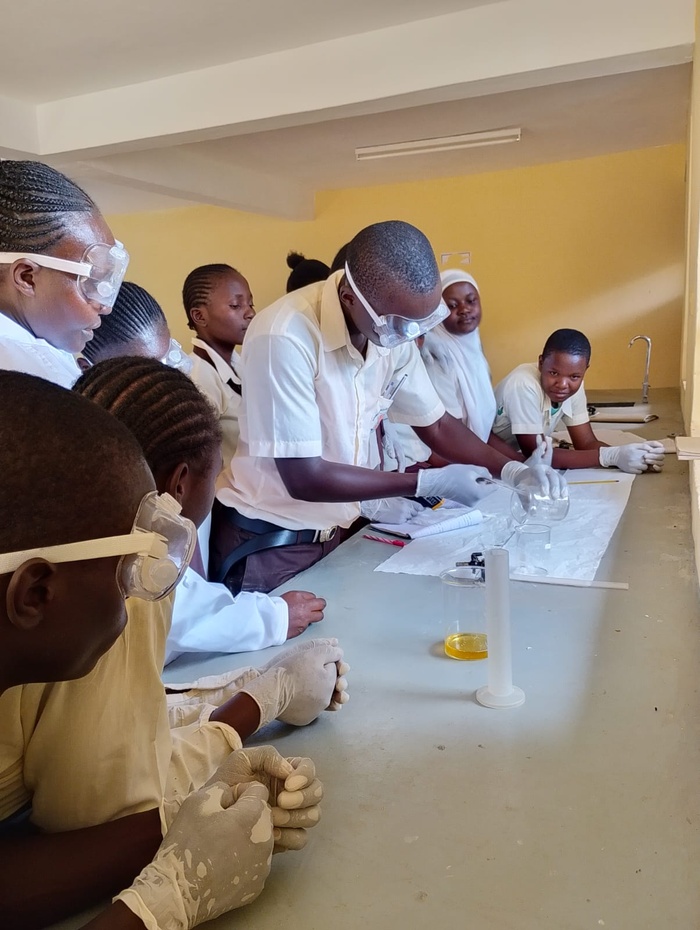
Designed for Senior School Grade 10 (CBE) and Form 3 and 4. Learners work in groups of five, with full safety gear and a teacher present at all times.
1 · Introduction and safety
Equipment, a risk assessment, and examining oil seeds and medicinal herbs. Business link: what makes a product "value-added"?
2 · Extraction
Rendering animal fat and extracting essential oils, colours and plant compounds from rosemary, aloe vera, neem and ginger. Science: "like dissolves like", evaporation and filtration.
3 · Saponification
Oils and fats react with sodium hydroxide to make soap. Science: exothermic dissolving, stoichiometry and emulsions.
4 · Formulation and curing
Groups design their own herbal soap and track mass and pH for about four weeks as it cures.
5 · The science of cleaning
Micelles, surface tension and intermolecular forces: why soap lifts oily dirt.
6 · Quality and enterprise
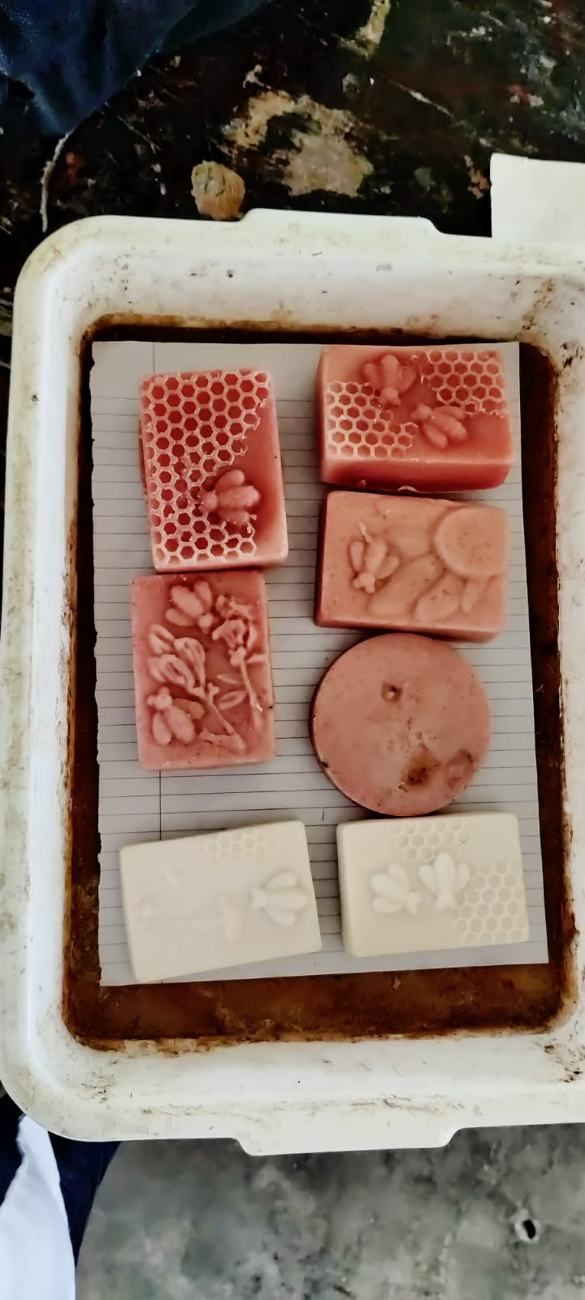
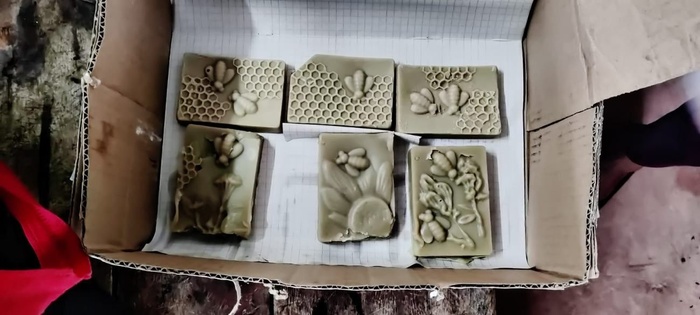
Appearance, lather and pH checks (good soap: pH 8–10), then a brand, a label and a 30-second pitch.
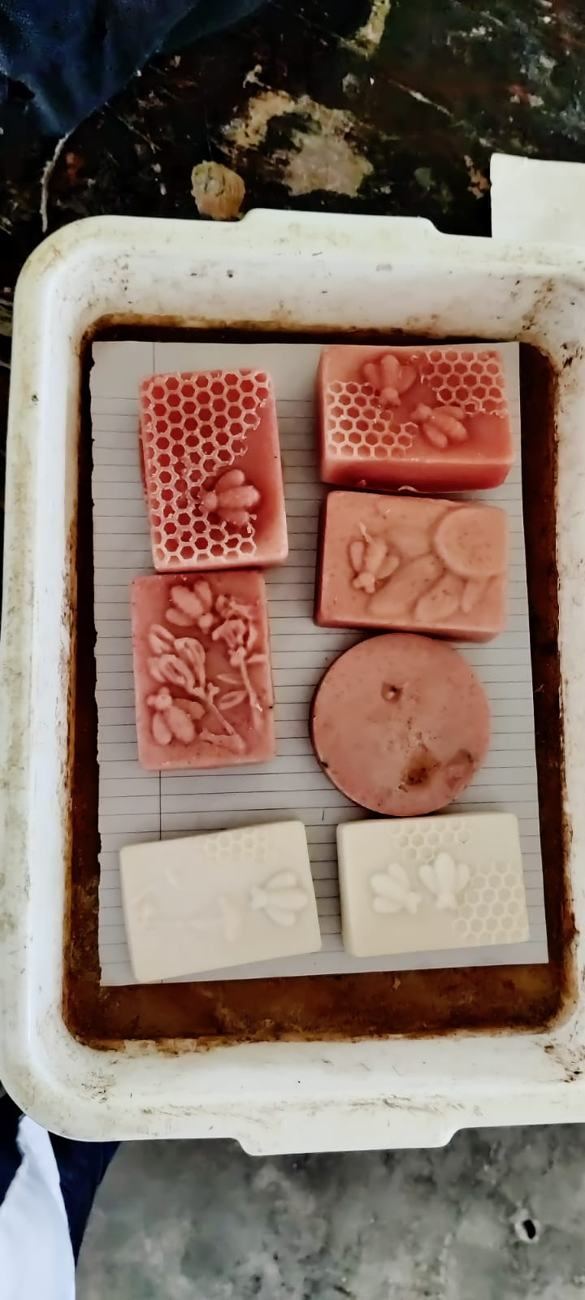
Science learners can hold in their hands
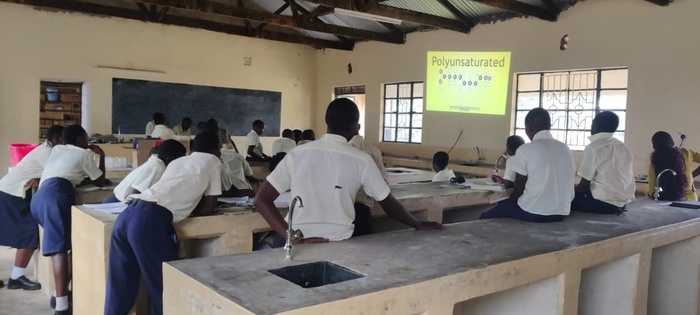
On their worksheets, learners explained why saturated fats are solid and unsaturated oils are liquid, using the shape of the molecules, and predicted that heat would be needed to melt fat before rendering it.
When one batch failed to set, the class kept it as a case study and investigated the possible causes: apparatus, temperature, the oil blend, impurities and water quality.
Demand outstrips places: at one school with no computer lab, more than 60 learners asked to join a cohort of 15 to 20.
Inside the Microfactory
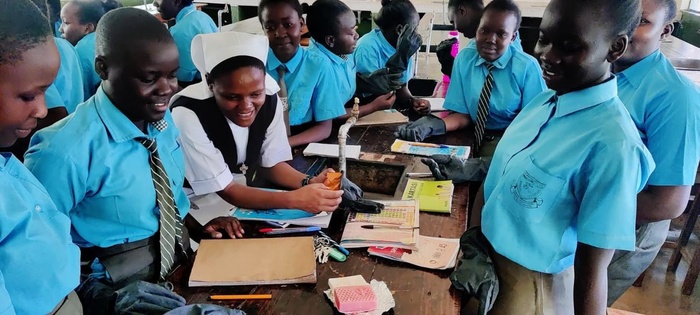
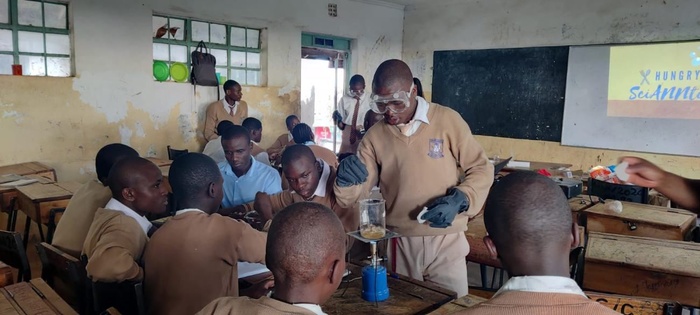
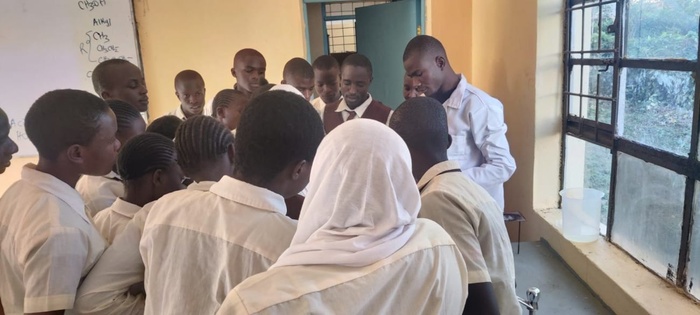
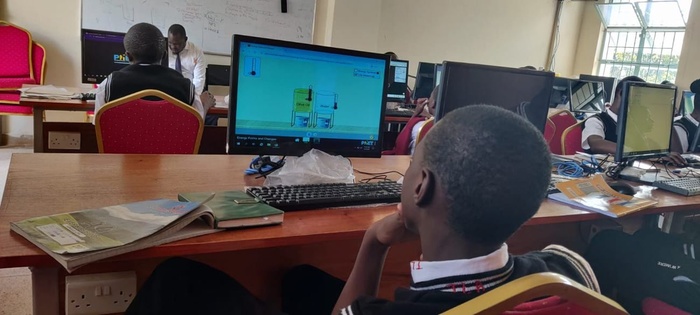
Bring the Microfactory to your school
We run the programme with your science department for one cohort of learners at a time, at your school or at a partner STEM centre.
What's included
- Facilitators for every session, and a short induction for your teachers
- The six-module curriculum, learner worksheets and assessments
- Chemicals, safety gear and portable equipment for the cohort
- Safety protocols, consent forms and parent letters
- Learner surveys at the start, middle and end, and a short report for the school
- A product showcase where learners present their soap brands
Getting started
- A cohort of 15 to 20 learners in Grade 10 or Form 3 and 4, with signed parent or guardian consent.
- A weekly slot of 2 to 3 hours, for example after classes or on a Saturday.
- A space a lab if you have one; otherwise a classroom works with our portable kit.
- A teacher contact who joins the sessions and keeps the work going between visits.
Costs depend on the number of learners, distance and materials. Tell us about your school and we will send a plan and a quote.
Request a plan and quote Teachers: the chemistry-of-soap lessons
Who makes it happen
The STEMpower Chemical Microfactory programme is led locally by the Masinde Muliro University of Science and Technology (MMUST) STEM Centre, supported by Case Western Reserve University through STEMpower, and delivered with STEMpathy Hub Africa and our partner schools.